News & Events
Ceit strengthens its commitment to the circular economy and sustainability with the creation of a new specialised group and the support of the Department of Sustainability of the Provincial Council of Gipuzkoa
Ceit strengthens its commitment to the circular economy and sustainability with the creation of a new specialised group and the support of the Department of Sustainability of the Provincial Council of Gipuzkoa
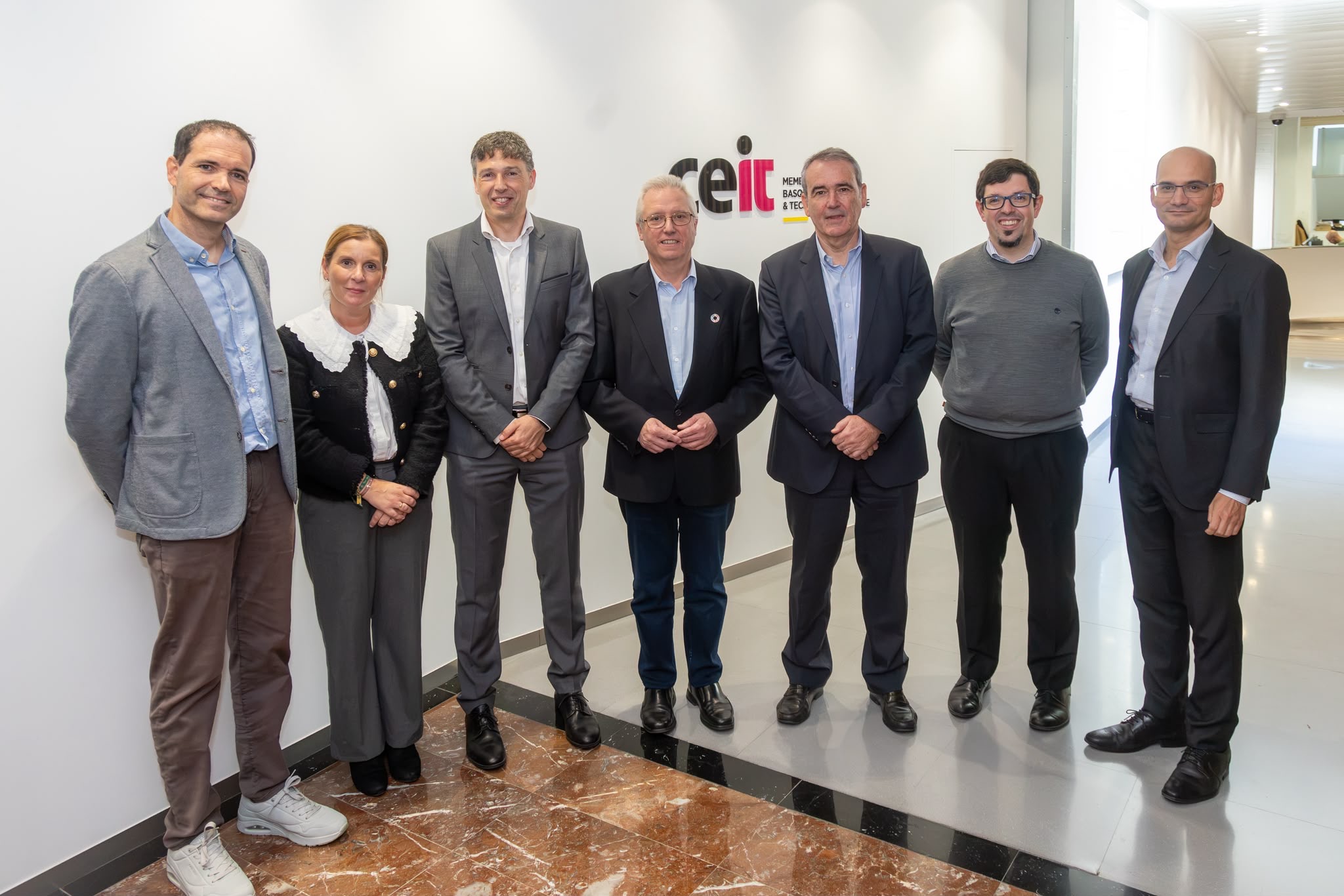
The Provincial Councillor for Sustainability, José Ignacio Asensio, visited Ceit to learn about this new strategic capability, which brings together the centre’s activities in critical materials, organic waste recovery and water technologies.
21 | 10 | 2026
Donostia-San Sebastián, 21 October 2026. The Provincial Councillor for Sustainability of the Provincial Council of Gipuzkoa, José Ignacio Asensio, visited Ceit’s facilities yesterday to gain first-hand insight into the new Circular Economy and Sustainability Group, a strategic initiative through which the technology centre is strengthening its capabilities to support industry in the transition towards more sustainable, resilient models that make more efficient use of resources.
The creation of this new group brings together, under a single structure, all the capabilities that Ceit had been developing in technological fields related to the circular economy and sustainability. Its aim is to build greater critical mass in research, promote new technological development areas and provide more comprehensive solutions to challenges that directly affect industrial competitiveness and European strategic autonomy.
During the visit, Ceit representatives presented the group's main areas of activity, which focus on three fields: critical materials, organic waste recovery and water technologies.
In the field of critical materials, Ceit develops advanced technologies to recover high-value critical metals from industrial waste, batteries and waste electrical and electronic equipment (WEEE). These technologies help reduce dependence on strategic raw materials and strengthen Europe's industrial autonomy. The centre also works on new designs and processes aimed at minimising the use of critical raw materials and promoting more efficient resource management, drawing on its proven expertise in magnetic components, hard metals, refractory materials and precious metals. The transfer of this knowledge to industry has led to the creation of several technology-based companies originating at the centre, including Metal 78 (2017), Ecomagnet (2021) and Battia (2025), which specialise in the recovery and recycling of strategic materials. The Provincial Council of Gipuzkoa has supported the development of these initiatives by backing various activities aimed at their growth and consolidation, thereby contributing to strengthening the region's industrial and technological ecosystem.
Another strategic area of the new group focuses on organic waste recovery, developing solutions related to biorefining processes, biomethane production, composting and nutrient recovery. These capabilities have been strengthened through close collaboration with the Department of Sustainability of the Provincial Council of Gipuzkoa over several years. A key example is the current agreement, under which research is being conducted into the use of organic reagents obtained from industrial biomass generated in the region to recover critical materials found in lithium-ion batteries.
Water technologies constitute the group's third major area of activity. Ceit combines its expertise in water treatment technologies, process modelling and digital tools to optimise water infrastructure, improve operational efficiency and promote the recovery and reuse of resources present in urban and industrial water streams.

During the visit, José Ignacio Asensio highlighted the importance of collaboration between public institutions and technology centres in addressing the challenges of the ecological transition and strengthening Gipuzkoa's competitiveness: "Collaboration with leading technology centres such as Ceit is essential to turn knowledge and research into real solutions for our industry. Gipuzkoa has a first-class technological ecosystem, and we must make the most of this potential to develop projects that enable us to become more competitive, reduce our dependence on strategic raw materials and move towards greater industrial and energy autonomy."
For his part, Ceit's Director General, Iñaki Díaz, emphasised the strategic nature of this initiative. "The creation of this Circular Economy and Sustainability Group reflects Ceit's strategic commitment to strengthening our capabilities in an area that is key to industrial competitiveness. We have brought together in a single team our expertise in resource recovery, critical materials recycling, biorefineries and sustainable water management," he explained.
The visit also provided an opportunity to highlight the longstanding collaboration between Ceit and the Department of Sustainability. This partnership has made it possible to promote applied research projects, develop new technological capabilities and support business initiatives arising from the knowledge generated at the centre.